⚽ A race to five goals
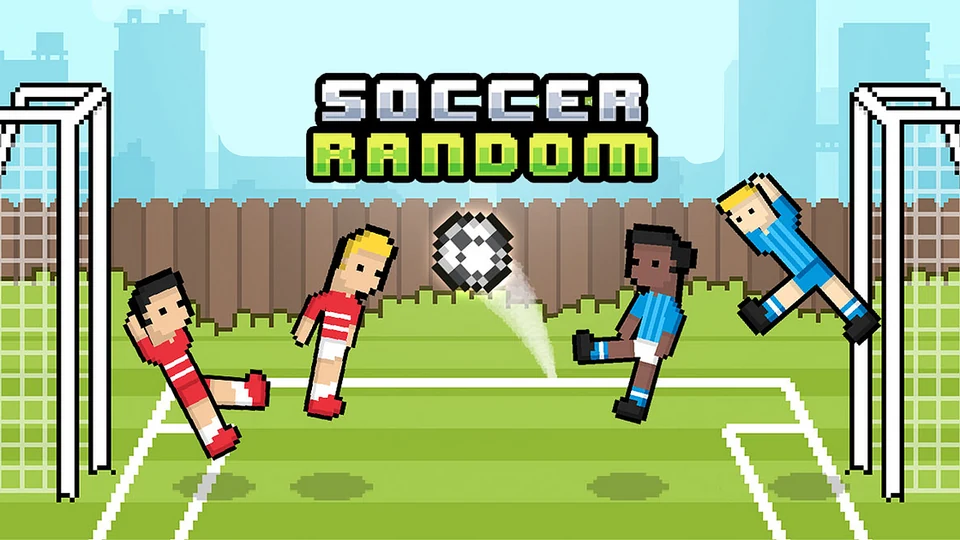
Soccer Random is RHM Interactive’s one-button soccer game. Each side has two physics-driven players, and the first side to score five goals wins. A match can be played alone against the computer or with a second person on the same device.
After a goal, the field and playing conditions can change. The ball, player bodies and goal setup can make the next kickoff feel surprisingly unfamiliar. There is no transfer market to manage and no formation editor to perfect. The immediate question is whether you can meet a moving ball with a useful part of a tumbling player.
🎮 Share the keyboard, then learn the lean
| Setup | Input | What it controls |
|---|---|---|
| Left side in local two-player | W | The movement and kicking action of that pair |
| Right side in local two-player | Up Arrow | The movement and kicking action of the other pair |
| Supported touch play | Tap your side of the screen | The corresponding team’s action |
| Solo match | Follow the on-screen side prompt | Your pair against the computer-controlled side |
The characters accelerate in the direction they are swinging. This is why pressing the correct key can still produce a move you did not intend. Look at the bodies before acting. Another press does not magically cancel the momentum already in the scene.
👟 Read the point in three moments
At kickoff: find the new geometry
Look at the ball, the width of the goal opening and your players’ reach. Give yourself one deliberate movement to see how the setup responds. Do not bring the previous goal’s timing into a scene that has changed.
In open play: watch the contact
A foot meeting the ball at the right moment can create a useful shot. Jumping early may send your player above it; jumping late may leave the ball behind the body. Follow the ball’s arrival rather than simply pressing whenever it is on your half.
Near goal: protect the next bounce
Consider where the ball will go if the first block works. Sending both players away from the opening can turn a successful touch into an easy rebound for the opponent. Try to keep a body involved in the space the next bounce will use.
🧱 The low-ball problem
Suppose an opponent sends the ball skimming toward your goal. A dramatic jump may put both defenders above its path. If your nearest player is already between the ball and the opening, a smaller, better-timed intervention can be more useful than another airborne scramble.
You are not selecting a separate “low block” command. You are choosing when to activate a physics-driven pair. Watch the current lean, anticipate the ball’s next position and act while a foot or body can still occupy that lane. After contact, look again. The rebound may now be your simplest attacking opportunity.
🥅 A block is only the first contact
Imagine a shot hits your front player and rebounds toward the middle. If the next press sends both players away from the opening, a successful initial block can still leave an easy second chance.
Before contact
Meet the incoming path with a body or foot that can actually reach it. A dramatic jump above a low ball does not cover that lane.
After contact
Read the new direction. The rebound may need another block, a controlled touch or an attacking attempt.
There is no separate command for each teammate. Think in terms of the pair’s next useful position. One deliberate correction after seeing the bounce is easier to learn from than a string of presses made before it.
🥅 Shoot where the defenders are leaving
A ball high above the pitch invites an early jump, but an opponent who has already committed may be opening a ground-level route. A low ball can be sent beneath an airborne defender; an aerial touch can escape a crowded floor. Neither is always better. Read the opponent’s position before deciding which contact is useful.
Against a friend, watch the tendency behind the movement. Some players jump as soon as the ball approaches. Others wait near the goal. Make your next attempt respond to that habit. The game supplies unpredictable physics, but the other person may be much more predictable.
💬 Two questions worth settling
Can I steer each player separately?
No. One control operates the side’s pair. That shared input is the central constraint, so plan around the two bodies you have rather than expecting individual movement commands.
Does another random setup erase the score?
No. A goal changes the conditions for the next point while the match continues toward five. Keep watching the scoreboard, particularly when one side is close to finishing.
If you prefer a sports challenge with time to weigh the next choice, try the 17-0 game on the homepage. The football draft guides focus on the decisions before the result instead of the moment a foot meets the ball.