⚡ Football with the pace turned up
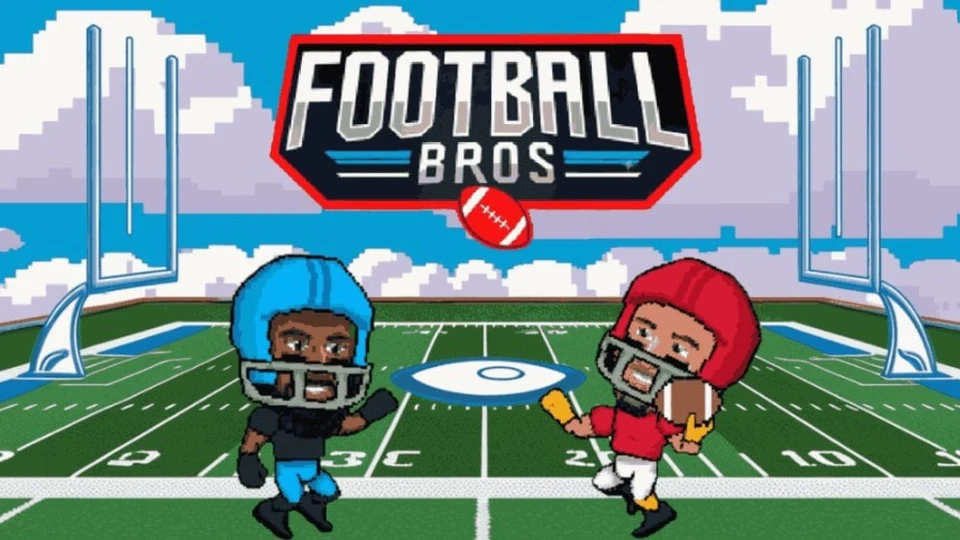
Football Bros is Blue Wizard Digital’s arcade American football game. You choose plays and directly move a character during the action. There is room for passing, running and disruptive defense, but you do not need a controller full of separate commands to begin.
Its multiplayer options make anticipation especially valuable. A person can notice your favorite escape route and wait for it. Start with a solo match to get comfortable with movement, then treat a human opponent as a new problem rather than expecting the same opening to work forever. Use the modes and connection options presented by the game menu.
🎮 One action button, several football situations
| Input | Job | Useful habit |
|---|---|---|
| Arrow keys or WASD | Move the character you control | Make a short directional adjustment before committing |
| Space | Contextual action: pass, dive or stiff-arm | Check who has possession before pressing |
| On-screen play choices | Select the next play | Read the route or running shape before the action starts |
| Mode-specific prompts | Set up the selected match | Check the displayed controls before shared-keyboard play |
The important detail is context. Space is not a universal “throw now” key. Once the ball carrier and situation change, the action changes too. Spend a few possessions noticing that transition. Repeatedly pressing the button can commit you to an action before you have decided what the play needs.
🎮 Re-read Space when possession changes
| Situation to notice | Question before pressing |
|---|---|
| You are setting up an attack | Which play shape and first route am I trying to use? |
| Your runner meets a defender | Is movement creating space before the contextual action? |
| The opponent has the ball | Will my angle cover the runner’s next lane? |
The action key changes with the situation; it is not a permanent passing command. For one possession, pause the repeated key presses and watch that transition. If movement is sound but the action is mistimed, practice the action. If the lane is wrong, pressing it sooner only commits the same positioning error.
📒 Pick a play with an exit route
- First look
- Choose the space you hope to attack. A play is easier to read when you know which lane or receiver you are watching first.
- Second option
- Identify where to go if the opening closes. A short gain is useful when it keeps you out of an avoidable turnover.
- Stop condition
- Know when the adventurous part of the play is finished. Once you have gained the required ground, unnecessary contact can put the possession at risk.
These are reading habits, not hidden bonuses. The game does not reward you for naming an exit route; it rewards the useful space that route gives your player.
🟢 Attack the space beside the defender
Suppose your runner reaches a defender standing directly in the path to the end zone. Driving straight at that defender makes the collision easy to predict. A small diagonal change can force the defender to adjust, especially if you begin it before the gap becomes narrow.
Watch the second defender as well. Beating the nearest player is not enough if the move delivers you into the next tackle. Choose the lane that leaves room after the first evasion. Against a friend, vary when you change direction; repeating the same cut on each possession turns it into an invitation.
🛡️ Defend the lane, not yesterday’s location
Chasing directly behind a runner leaves you reacting to where the player has already been. Look toward the route to the goal and try to meet the runner along it. Keep enough control to change direction if the runner cuts. A wild dive that misses may remove your chance to correct the angle.
On a passing play, notice where a receiver is heading before rushing toward the ball’s starting point. You are trying to arrive at a useful location, not win a straight-line race to a moving target. This is especially helpful after a human opponent shows the same preferred route twice.